
Case study: Rebuilding the Small Business Debt Helpline
Client: Financial Counseling Australia (FCA)
Role: Content Strategist and Designer
Overview
The Small Business Debt Helpline offers free and confidential financial counseling to small business owners under financial stress. It was set up in March 2020 following catastrophic bushfires on Australia's east coast. However, the scope of the Helpline quickly expanded with the advent of COVID-19.
The Helpline was experiencing low engagement. It urgently needed to increase case numbers to demonstrate demand for the service and secure government funding.
I joined the project in January 2021 to restructure and repurpose the Helpline's website.
Challenge
The Helpline's website content was out-dated, unstructured and missing key information. The support on offer was unclear, placing the burden on small business owners to work out what to do next.
To increase case numbers, I needed to reposition the website as a credible, trustworthy and useful service for all small businesses in financial distress – not just those affected by bushfires. This required balancing empathetic and reassuring messaging with well-timed calls-to-action to drive calls to the Helpline.
FCA required a realistic, sustainable solution to be delivered in just 3 months.
Approach
To work within the project's constraints, I implemented a minimal viable product (MVP) approach to prioritize content that addressed the key needs of small business owners.
Identify user needs. To better understand the needs of small business owners, I ran a workshop with Helpline staff to define key personas and their 'top tasks'.
Understand the problem. I conducted a qualitative audit of the Helpline's website content to identify key, recurring content problems.
Create a clear strategy. I developed an actionable content strategy that connected current state problems with content solutions to achieve the Helpline's goals.
Design the content. I followed a thorough content design process to:
- plan content to address user needs
- write and structure content to make information approachable
- balance self-serve information with calls-to-action
- work with Helpline staff to ensure factual, legal and messaging accuracy
- meet acceptance criteria to achieve sign-off.
I leaned on the experience of the Helpline staff to ensure the website reflected the support that small business owners would receive over the phone. To build trust, I used clear and consistent messaging across the site.
Examples
Simplified website navigation makes it easier for users to find information.


Shifting the messaging from 'what you need to do' to 'we can help you' builds trust and supported the goal of increasing calls to the Helpline.
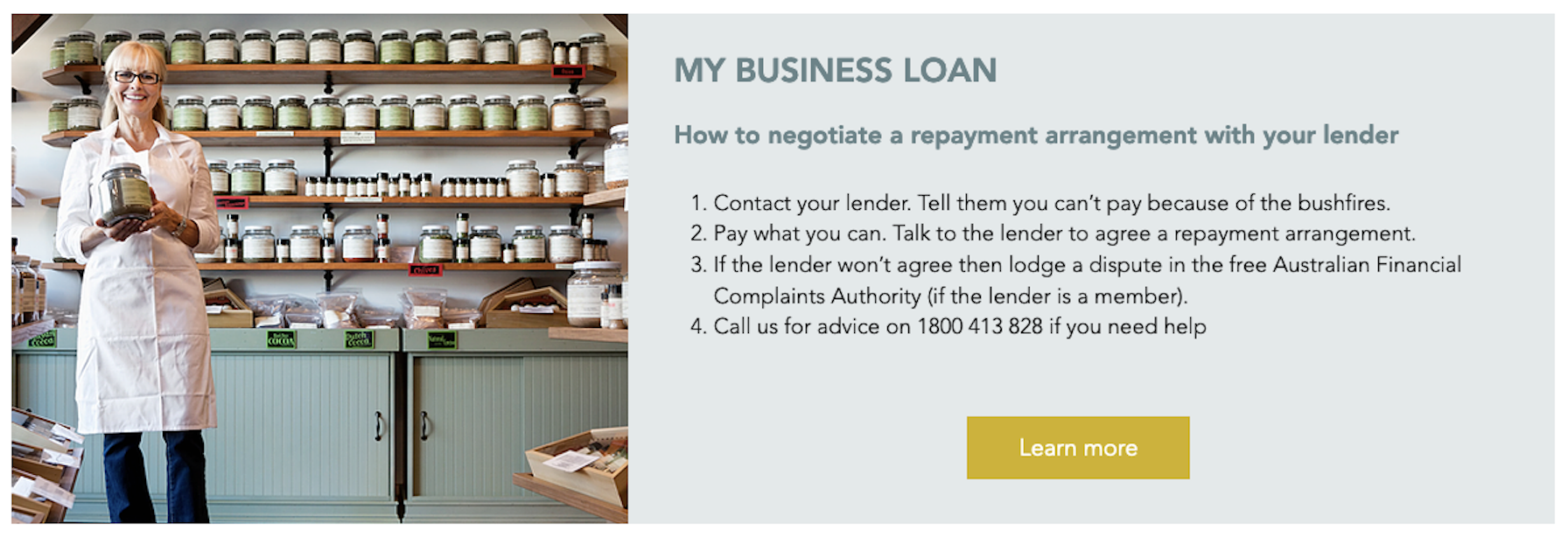

To reduce uncertainty about when to call and what to expect, I added reassurance under clear subheadings, including 'When to seek help', and 'Who you'll talk to'.
Deliverables
- Content strategy
- Information architecture
- 4 content types
- 25 pages of web content
- Editorial style guide
The project was delivered within the ambitious 3-month timeframe.
Results
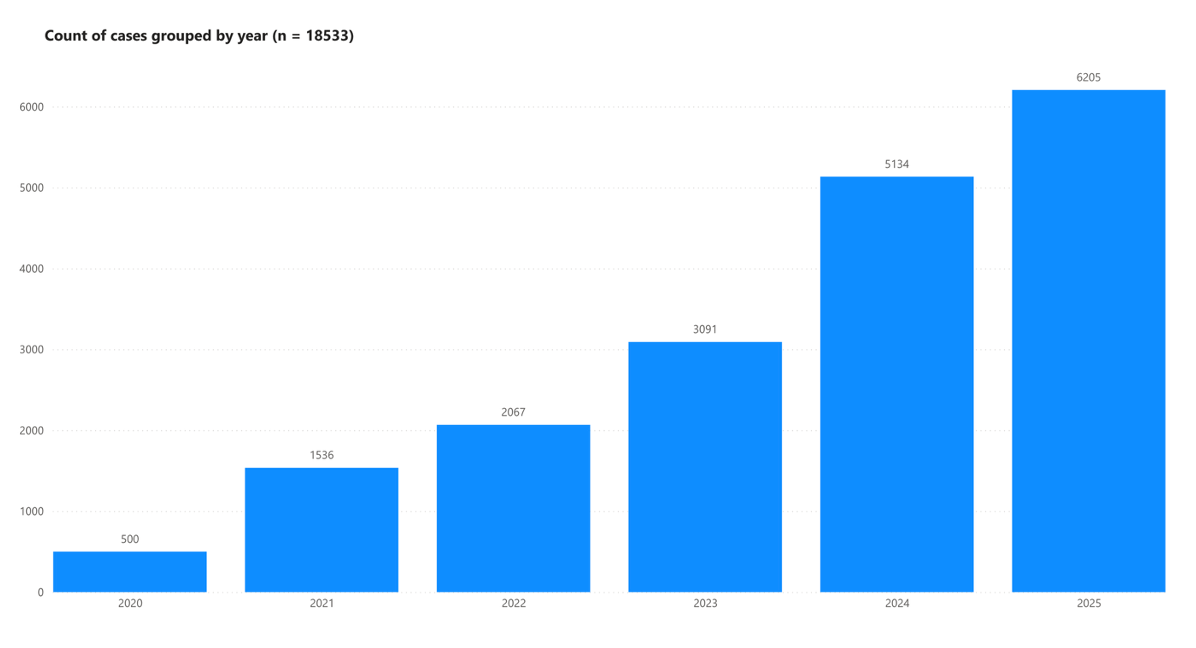
The Helpline has seen significant and consistent growth since the new content launched in 2021. By the end of 2021, case volumes were up 207% on the previous year. Over 5 years, annual case numbers increased by 1,141%.
In 2022, FCA secured $4 million in federal government funding. Funding has been extended until 2027.
The Helpline is recognized as a vital national service that has helped thousands of small business owners under increasing financial pressure.
Key learnings
Constraints don’t have to diminish the end result – they can force better decisions. This project reinforced the value of:
- aligning content to a clear objective
- taking a tailored, strategic approach to prioritize key user needs
- deep collaboration with subject matter experts to translate expertise into accurate, actionable guidance.
References
Financial Counseling Australia (2026, February 11). Financial Counseling Australia welcomes extended funding for the Small Business Debt Helpline.
Financial Counseling Australia (2022, October 20). Financial Counseling Australia welcomes funding for small business financial counselling.